
How to Play 8 Ball Pool: Complete Rules & Professional Guide
📋 Table of Contents
1. What is 8 Ball Pool?
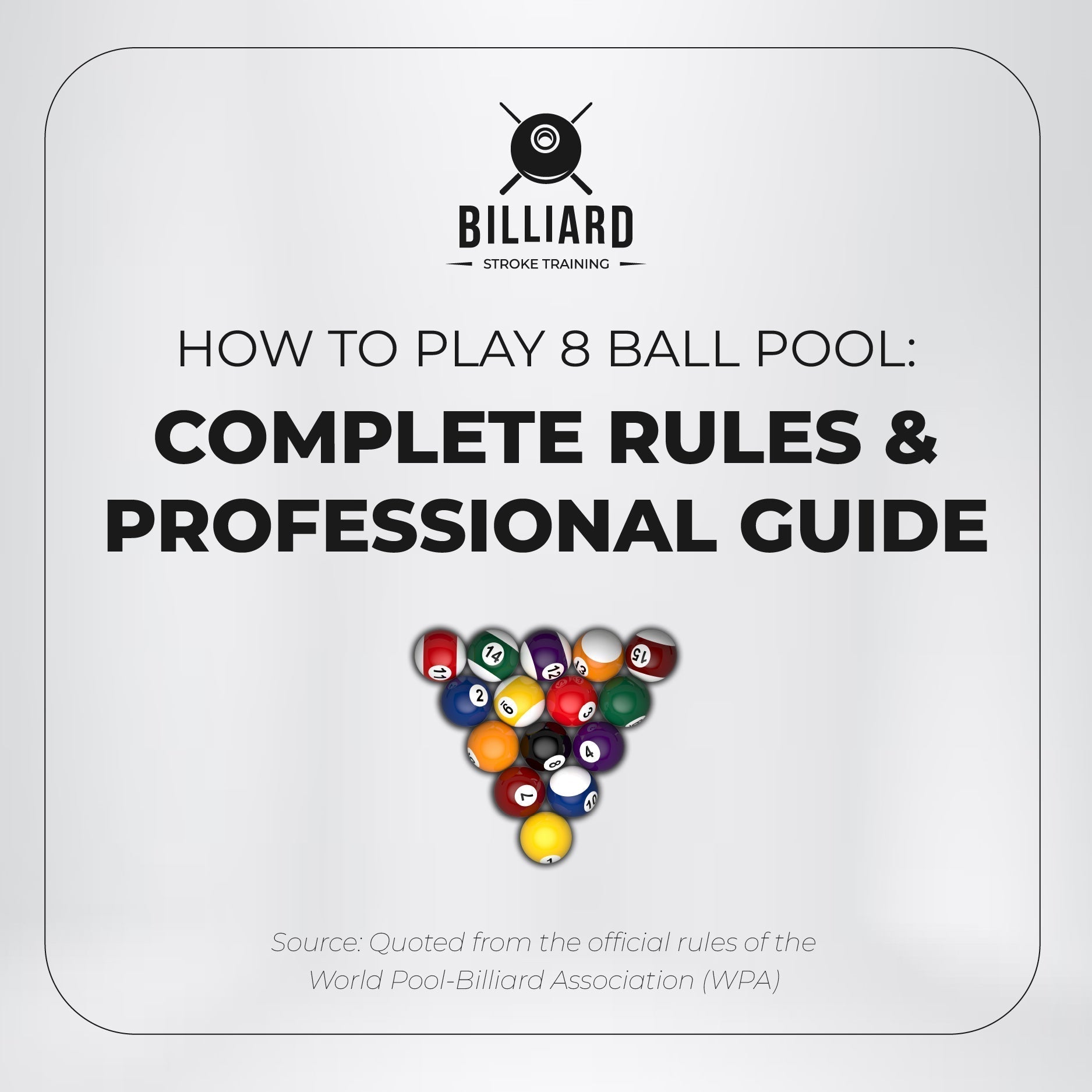
8 ball pool is played on a standard pool table using:
-
15 colored balls: numbered 1-15
- Balls 1-7 are solid colors (solids)
- Balls 9-15 are striped (stripes)
- The 8 ball is solid black
- 1 white cue ball: used to strike the object balls

2. Setting Up the Game
How to Rack 8 Ball Pool
Proper racking is essential for a fair game:
- Use a triangle rack to arrange all 15 balls
- Position the lead ball on the foot spot (the marked spot on the table)
- Place the 8 ball in the center of the triangle (third row, middle position)
- Put one solid and one stripe in the back corners
- Arrange remaining balls randomly, ensuring they're tightly packed
- Remove the rack carefully to keep balls in position
Determining Who Breaks
- Flip a coin
- Lag for break (both players shoot from behind the head string; closest to head rail breaks)
- Winner of previous game breaks
- Alternate breaks in a match

3. Official 8 Ball Pool Rules
1. The Break Shot
How to Break:
- Place the cue ball anywhere behind the head string (break line)
- Strike the lead ball with force to spread the balls
A legal break must achieve ONE of these:
- Pocket at least one ball, OR
- Drive at least four object balls to the rails
Break Outcomes:
- Balls pocketed on break: Continue shooting, but table is still "open"
- 8 ball pocketed on break: Usually an automatic win (check house rules)
- Scratch on break: Opponent gets ball-in-hand behind the head string
- Illegal break: Opponent may accept the table or request a re-rack
2. Open Table and Choosing Groups
After the break, the table is "open," meaning:
- Neither player is assigned to solids or stripes yet
- You can aim at any ball except the 8 ball
- The first player to legally pocket a called ball claims that group

3. How to Take Your Shot
Legal Shot Requirements:
- Contact your ball first: Hit your designated group before any other ball
- Pocket a ball OR hit a rail: After contact, either pocket a ball or drive any ball to a cushion
- On open table: You can hit any ball (except 8 ball) first
Calling Your Shot:
- In most games, call which ball goes into which pocket for non-obvious shots
- Obvious shots may not need to be called (check house rules)
- The 8 ball shot MUST ALWAYS be called
- Lucky shots (slops) may or may not count based on agreed rules
4. Common Fouls
Standard Fouls:
- Scratch: Pocketing the cue ball
- Wrong ball first: Hitting opponent's ball before yours
- No rail: Not driving any ball to a rail after contact (if no ball is pocketed)
- Touching balls: Moving any ball with hand, clothing, or cue
- Shooting out of turn
- Double hit: Striking the cue ball twice in one shot
- Balls in motion: Shooting before all balls have stopped
- Jump shot violation: Scooping under the cue ball
When your opponent commits a foul, you receive "ball-in-hand" — place the cue ball anywhere on the table and shoot in any direction. Some house rules give ball-in-hand only behind the head string for certain fouls. Always clarify rules before playing.
5. Winning the Game
How to Win:
- Legally pocket all your designated balls (7 balls)
- Call your 8 ball shot (ball and pocket)
- Legally pocket the 8 ball in the called pocket
How to Lose (8 Ball Fouls):
- Pocketing the 8 ball before clearing your group
- Pocketing the 8 ball in the wrong (uncalled) pocket
- Scratching while shooting the 8 ball
- Knocking the 8 ball off the table
- Pocketing the 8 ball and another ball simultaneously on the final shot

4. How to Play 8 Ball Pool: Step-by-Step Guide
Learn Proper Stance
Body Position:
- Stand with dominant foot back at 45-degree angle
- Keep your body balanced and stable
- Bend at the waist, keeping your back relatively straight
- Lower your head to sight down the cue
Bridge Hand:
- Place firmly on the table for stability
- Spread fingers for a wide, stable base
- Create a groove between thumb and index finger for the cue
Grip:
- Hold the cue loosely, like holding a bird
- Grip about 6-8 inches from the butt end
- Keep your wrist relaxed and loose
Master the Basic Stroke
Pre-Shot Routine:
- Survey the table and choose your shot
- Visualize the path of the cue ball
- Get into your stance
- Practice stroke 2-3 times without hitting the cue ball
- Take a breath and execute smoothly
Stroke Mechanics:
- Keep your back arm as a pendulum
- Accelerate smoothly through the shot
- Follow through completely (don't stab at the ball)
- Keep your head down until the shot is complete
Understanding Aim and Contact Points
Basic Aiming:
- Imagine a line from the target pocket through the center of the object ball
- Where this line extends backward is your "ghost ball" position
- Aim to place the cue ball where the ghost ball would be
Cut Shots:
- Straight shot: Cue ball hits object ball dead center
- Half-ball hit: Cut angle of about 30 degrees
- Quarter-ball hit: Thinner cut, object ball goes at sharper angle
- Thin cut: Very fine contact, object ball travels almost perpendicular
Cue Ball Control Basics
- Center Ball (No Spin): Hit cue ball in the exact center — easiest, most reliable
- Top Spin (Follow): Strike above center — cue ball rolls forward after contact
- Back Spin (Draw): Strike below center — cue ball spins backward after contact
- Side Spin (English): Strike left or right — changes angle off rails (advanced)
Planning Your Shots
- Always plan at least your next shot
- Position the cue ball for your next shot after every strike
- Choose high-percentage shots over difficult ones
- If no good shot exists, consider playing safe
- Plan your path to the 8 ball early
🎯 Perfect Your Aim with Ghost Ball Aim Trainer
Master the ghost ball aiming technique faster with our specialized training tool. This innovative trainer helps you:
- Visualize contact points instantly
- Develop muscle memory for accurate shots
- Practice cut angles with immediate feedback
- Build confidence in shot selection
- Accelerate your learning curve dramatically
Perfect for beginners learning basic aiming and intermediate players refining their precision.
Shop Ghost Ball Trainer →
5. Basic Strategy and Tips
1. Breaking Strategy
Effective Break Technique:
- Position cue ball slightly off-center (1-2 diamonds from center)
- Hit the lead ball as full as possible with controlled power
- Aim for the second ball in the rack for better spread
- Follow through completely for maximum energy transfer
After the Break: Survey the table before choosing your group. Look for which group has better spread and easier run-out. Identify problem balls that are clustered or difficult.
2. Position Play Fundamentals
- Try to leave the cue ball in a position where your next shot is easy
- Use soft speed for better control
- Think 2-3 shots ahead when possible
- Avoid getting too straight on the object ball — it makes positioning difficult
3. When to Play Safe
Play defense when no clear shot is available, you're likely to miss and leave your opponent an easy run-out, or you want to force your opponent into a difficult position.
- Hide the cue ball behind your own balls
- Leave the cue ball far from opponent's balls
- Place the cue ball on or near a rail
4. Common Beginner Mistakes to Avoid
- Rushing Your Shots: Take your time. Use a consistent pre-shot routine.
- Neglecting the Cue Ball: Making a ball is only half the job — always think about where the cue ball ends up.
- Poor Shot Selection: Don't always shoot at the easiest ball. Consider position for your next shot.
- Inadequate Chalk: Chalk your cue before EVERY shot to prevent miscues.
- Not Planning the 8 Ball: Identify your 8 ball shot early and work toward good position for it.
🎱 Master Your Stroke with Billiard Stroke Training Board
Develop a consistent, professional stroke with our Billiard Stroke Training Board. This essential training tool helps you:
- Eliminate unwanted side-to-side movement
- Build muscle memory for straight shots
- Improve follow-through consistency
- Develop proper stroke mechanics faster
- Practice at home anytime
Used by beginners and professionals alike, the Stroke Training Board is the fastest way to develop a reliable, repeatable stroke.
Shop Stroke Training Board →
6. Frequently Asked Questions
Can you hit the opponent's balls?
What happens if you scratch on the 8 ball?
Do you have to call every shot?
Can you use opponent's balls to make your shot?
What is ball-in-hand exactly?
Can you combo the 8 ball with your last ball?
Is a jump shot legal?
What if the 8 ball goes in on the break?
7. Practice Tips for Improvement
Building Good Habits
Consistent Pre-Shot Routine:
- Survey the table and choose your shot
- Visualize the shot path
- Get into your stance
- Take practice strokes
- Execute with confidence
Focus on Fundamentals: Master your stance and grip first. Practice straight-in shots until automatic. Build cue ball control gradually. Don't rush to advanced techniques.
Effective Practice Drills
Drill 1: Straight Shots
- Place a ball in front of each pocket
- Shoot straight-in shots from various distances
- Focus on smooth stroke and following through
- Goal: Make 10 in a row
Drill 2: Position Play
- Set up two balls in line
- Pocket the first ball and leave position for the second
- Practice with different speeds and spins
- Goal: Make both balls 8 out of 10 times
Drill 3: Cut Shots
- Practice half-ball, quarter-ball, and thin cuts
- Set up shots at various angles
- Focus on consistent aim point
- Goal: 70% success rate on each angle
Drill 4: Nine Ball Pattern
- Set up balls in a line on the table
- Pocket them in order (1-9)
- Requires good position play
- Goal: Complete the pattern without missing
Mental Game
- Take deep breaths before difficult shots
- Don't let mistakes affect your next shot
- Focus on the process, not the outcome
- Analyze why you missed and adjust — every shot is a learning opportunity
Conclusion
Learning how to play 8 ball pool is a rewarding journey that combines physical skill, strategy, and mental focus. By mastering the basic rules, developing solid fundamentals, and practicing consistently, you can progress from beginner to accomplished player.
Whether you're playing casually with friends or competing seriously, 8 ball pool offers endless opportunities for enjoyment and skill development. Start with the basics, be patient with yourself, and remember that every professional was once a beginner.
🚀 Ready to Take Your Game to the Next Level?
Discover our complete range of professional billiard training equipment designed to accelerate your improvement and help you play like a pro.
Shop All Training Equipment →
Verry usefull tips, im learning to playing this game